Your Cart
Your cart is empty

Looks like you haven't added any test / checkup to your cart

Add Test / Checkup
Lab Test

Thyroid Profile - IV

The Thyroid Profile - IV is a comprehensive blood test that measures a range of hormones and antibodies to assess the overall function of your thyroid gland. This test panel includes measurements for Anti-Thyroglobulin (Anti-TG), Anti-Thyroid Peroxidase (Anti-TPO), Free Triiodothyronine (FT3), Free Thyroxine (FT4), Total Triiodothyronine (T3), Total Thyroxine (T4), and Thyroid-Stimulating Hormone (TSH).


  • Profile NameThyroid Profile - IV (Anti-TG, Anti-TPO, FT3, FT4, T3, T4, & TSH)
  • Sample TypeBlood
  • Preparations RequiredNo fasting is required for this test. You can maintain your regular diet and daily activities unless otherwise advised by your healthcare provider.
  • Report Time4 hours

The thyroid, a small, butterfly-shaped gland located in the front of your neck, produces T3 and T4 hormones, which play a significant role in body metabolism. The free forms of these hormones, FT3 and FT4, represent the active, unbound portion available for use by cells. TSH, produced by the pituitary gland in your brain, regulates the production and release of thyroid hormones. Anti-TG and Anti-TPO are antibodies that target thyroid proteins, and their presence can indicate autoimmune thyroid diseases like Hashimoto's thyroiditis and Graves' disease.

Home Sample Collection Process

1
Book your convenient slot
2
Sample Collection by Phlebotomist
3
Reporting of the sample at lab
4
Download Reports
Download Reports

Note: Home Sample Collection is only for Pathology lab tests.

Frequently Asked Questions

This test is commonly ordered when symptoms suggest a thyroid disorder, such as unexplained weight gain or loss, fatigue, heart palpitations, or changes in skin and hair quality.

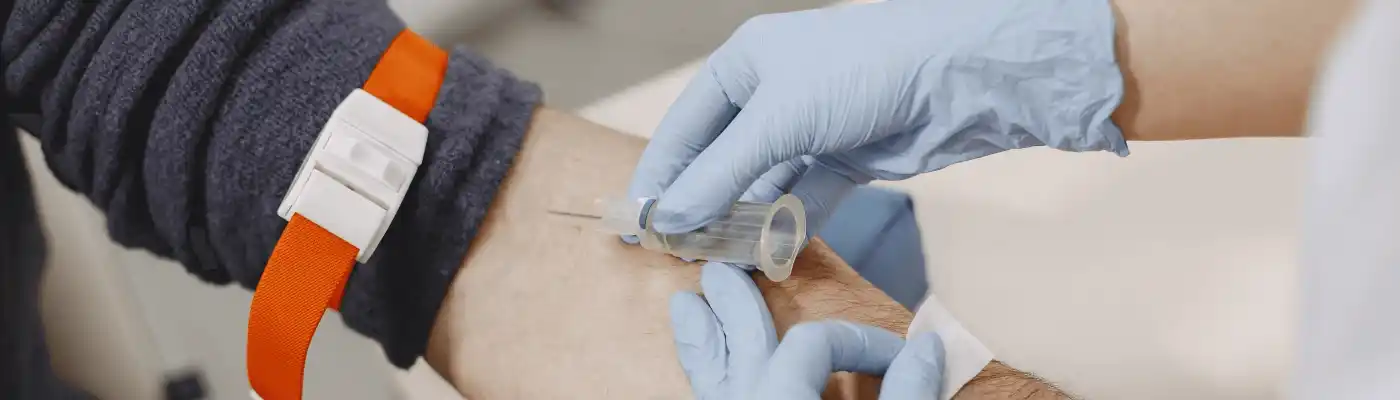
The test requires a small sample of blood, usually taken from a vein in your arm.

You may feel a slight prick when the needle is inserted, but any discomfort should be brief and minor.

If the levels of FT3, FT4, T3, T4, TSH, Anti-TG, or Anti-TPO in your blood are outside the normal range, it may indicate a thyroid disorder. Your healthcare provider will interpret your results in the context of your symptoms and medical history.

Yes, this test can be conducted safely during pregnancy. However, be sure to inform your healthcare provider about your pregnancy as thyroid hormone levels can change during this period.

The frequency of the test depends on your personal health condition and your healthcare provider's recommendation.

Yes, certain medications can influence the levels of thyroid hormones and antibodies in your blood. It's important to inform your healthcare provider about any medications you're currently taking.

Abnormal test results may need further investigation. Your healthcare provider will guide you through the next steps, which may include additional testing or a treatment plan.

Yes, depending on your symptoms, medical history, and these test results, your healthcare provider may order additional tests.

Treatment for abnormal thyroid hormone or antibody levels usually involves medication. Additionally, a healthy diet and regular exercise can support your overall health and well-being.

A positive result indicates that your thyroid hormone or antibody levels are outside the normal range, which may suggest possible thyroid issues. However, a positive result doesn't necessarily mean you have a disease. Further investigation is usually required.

Yes, lifestyle changes such as regular exercise and a balanced diet can help maintain overall thyroid health. However, significant changes in thyroid hormone or antibody levels typically require medical intervention.

No, the Thyroid Profile - IV test can be done at any time of day. Fasting is not required.

Yes, if a thyroid disorder is suspected, this test can be used for individuals of all ages.

Yes, you should be able to return to your regular activities immediately following the test.

Yes, it's possible to have a thyroid disorder with normal hormone levels, particularly in the early stages of certain conditions. Your symptoms, medical history, and additional tests can guide the diagnosis and treatment process.

These tests are generally reliable for identifying abnormal thyroid hormone and antibody levels. However, results should be interpreted in the context of your overall health and symptoms.

Generally, you can expect results within 1-2 days, but the timeline can vary among laboratories.

If you have a thyroid disorder, your healthcare provider may recommend periodic testing to monitor your condition. The frequency of these tests will depend on your individual circumstances.

Factors such as medications, pregnancy, and acute or chronic illnesses can affect thyroid hormone and antibody levels. Always share your full medical history with your healthcare provider to ensure accurate interpretation of your test results.

No, this is a blood test, while a thyroid scan is an imaging test that uses radioactive iodine to examine the structure and function of your thyroid gland.

Yes, untreated thyroid disorders can lead to a variety of health issues, such as cardiovascular diseases, osteoporosis, and mental health disorders. Regular monitoring and treatment are essential.

There's no special preparation needed for this test. You can eat, drink, and take your medications as usual unless instructed otherwise by your healthcare provider.

The risks associated with this test are minimal and similar to those of any standard blood test, including slight pain or bruising at the injection site. There's also a very small risk of infection.

Yes, chronic stress can disrupt various bodily functions, including your thyroid. If you're experiencing significant stress, discuss it with your healthcare provider.

Some thyroid disorders, like hypothyroidism, typically require lifelong treatment. However, many people with thyroid disorders lead normal, healthy lives with proper management.

Most thyroid disorders can't be prevented. However, a healthy lifestyle can support overall well-being and potentially mitigate some thyroid disorder symptoms.

This comprehensive test can diagnose many, but not all, thyroid disorders. Other tests, such as thyroid scans or ultrasounds, may be necessary for a full evaluation.

Recovery time varies depending on the specific disorder and treatment. Some people may see improvement in symptoms within weeks of starting treatment, while others may require longer management.

Most laboratories require a doctor's order for this test. However, policies may vary, so it's best to check with the specific laboratory.

Schedule Test in Your Available Time
Locations Near You in Hyderabad
  • 4KM from Madhapur
  • 3KM from Banjara Hills
  • 1.9KM from Yusufguda
  • 3KM from Madhura Nagar
  • 5KM from Shaikpet